
An illustrated extract from G. Roger Knight's Kin, Kilts & Kolonie: Scottish Sojourners in the Dutch Empire in Asia
What connects a Highland estate on Scotland's Morvern Peninsula with a homestead near Adelaide in South Australia – and what does either have to do with nineteenth-century Java, thousands of miles away?
The answer lies in the fortunes of two Scottish brothers, Gillian and Angus Maclaine. Gillian had made his money in the Dutch East Indies, where he established the mercantile firm Maclaine Watson & Co., which would become one of the colony's leading trading houses. His younger brother Angus, a Church of Scotland minister, was to find a very different future in the newly established British colony of South Australia.
But the connections between these seemingly distant worlds went much deeper than the movement of two brothers. Capital accumulated through trade in Java helped finance the establishment of a sheep station near Adelaide, named Ardtornish after the Highland home where the brothers had spent much of their youth. Impoverished Highland families followed, finding new lives on land from which its Indigenous Kaurna inhabitants had been displaced.
In Kin, Kilts & Kolonie, historian G. Roger Knight explores these interconnected histories of Scottish migration, colonial commerce and family networks across the Dutch and British empires. This extract from Chapter 3, The Kilted Dancer and an Antipodean 'Ardtornish', follows the creation of the Australian estate and the people whose lives it brought together.
The Antipodean Ardtornish and the Reverend Angus Maclaine
Having previously resigned his Highland parish and in the wake of his brother's death at sea in 1840 (when his ship went down with all hands in the Indian Ocean), the Reverend Maclaine had become a landed proprietor near Adelaide in the newly occupied colony of South Australia, established in 1836 on the fertile fringe of the Great Australian Bight.
With a sailing time of weeks rather than months from the Indies, and in common with the other main centres of British settlement in the Antipodes, it offered an outlet for Java's commodities, sugar and rice above all, and a potential for landed investment. The point had not been lost on the Reverend Maclaine's elder brother:
‘I believe I formerly mentioned to you that I have a ship engaged in the trade between this and Australia, which we find a rather profitable one,’ Gillian Maclaine confided some eighteen months prior to his premature demise. ‘We dispatched the Justina last month with our friend [Alexander] Loudon on board as passenger, for Hobart town and Sydney – with liberty to call at the new Settlement of S[outh] Australia.’
It was on the strength of this reconnaissance that the elder Maclaine had purchased land near Adelaide with some of the capital that he had accumulated in the Indies and placed it eventually under his brother's management. In writing to that brother about his intentions, Maclaine added:
‘I have requested Loudon to make particular inquiries respecting the new Settlement, and even authorized his investing 2000 pounds – if he thought favourably of the purchase of land there, he himself also advancing a like sum of 2,000 pounds – thus making a joint purchase of 4,000 pounds. For every 100 acres of land we buy, I believe that we have the right of getting out free of expense 12 emigrants, but I will give you all the particulars when Loudon comes back. He has sold his Sugar Plantation and is now a man of 25–30,000 pounds property, and having nothing to do, I advised his making a voyage in the ‘Justina’. . . . I have some plans, very unformed as yet, in view by which we (that is, you and I) can do good to some Highlanders and benefit ourselves.’
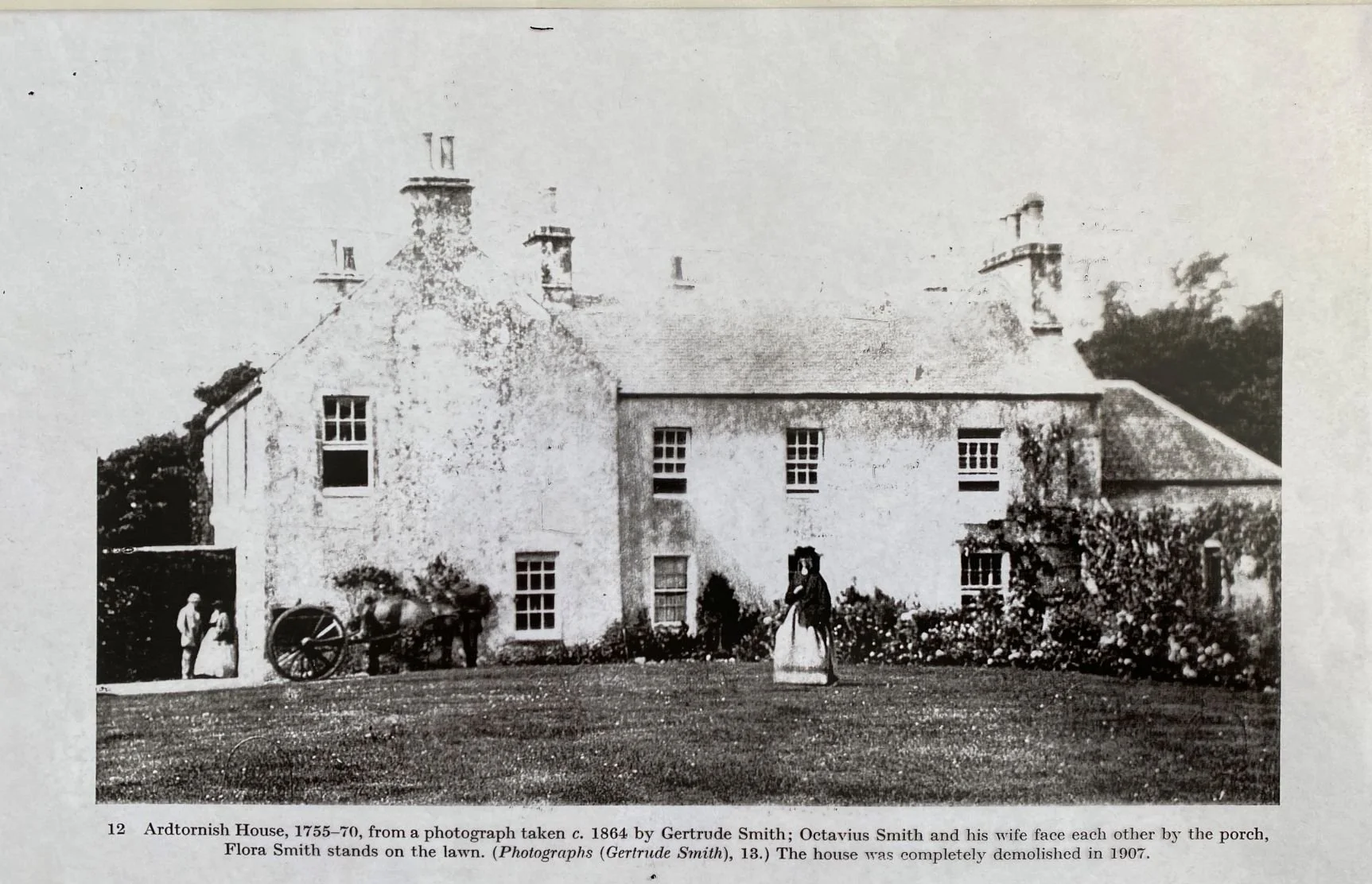
Ardtornish House, Morvern, Scotland. The home of Gillian and Angus Maclaine's uncle, John Gregorson, where the boys spent much of their youth. Collection of the Author.
‘Unformed as yet,’ the plans rapidly came to fruition, in the form of a 640-acre landholding named ‘Ardtornish’ in homage to the property owned in the Highlands by the Maclaine brothers' maternal uncle, John Gregorson, in a part of Scotland, the Morvern Peninsula mid-way up the west coast, where sheep-runs became as ubiquitous as they were becoming in the Antipodes: indeed, the arrival of ungulates of this kind in Scotland and the Antipodes was virtually contemporaneous, giving rise to parallel histories that blurred the distinction between metropole and colony.
An erstwhile tacksman of the Duke of Argyll, Gregorson was the proprietor of an extensive sheep farm on the Peninsula; and it was there, at Ardtornish House, that, along with their mother, the two siblings had spent much of their childhood and early youth.
With its First Nation Kaurna inhabitants driven off or otherwise ‘dispersed’, Gregorson's nephew repopulated the other Ardtornish with sheep from New South Wales, well over a thousand kilometres to the east, together with a score or more of impoverished Highland families recruited from his former parish of Ardnamurchan, on Morvern's bleak north-western coast.
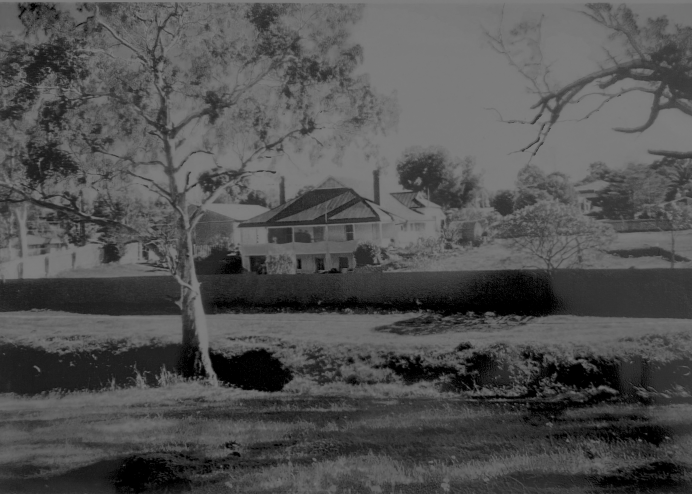
Ardtornish, South Australia – the house built near Adelaide by Angus Maclaine, younger brother of Gillian Maclaine. Collection of the Author.
The upshot was to open the possibility for Donald Maclaine of Lochbuie, the Reverend Maclaine's cousin now established in the Indies, to use South Australia as a convenient destination for his own indigent and in some cases unruly kin.
This was certainly the case with Alexander Maclaine, the most immediately needy of Donald Lochbuie's younger brothers, who had initially been destined (so it would appear) for employment of some sort on Java but for whom his sibling (on his arrival there) quickly sought an opening instead on the Reverend Maclaine's sheep station near Adelaide. Writing to his cousin Donald in January 1847, the latter remarked that:
‘If Alexander, your brother, comes here, let him forget all the habits of India. Here he must look sharp after every sixpence – and live roughly, do everything for himself that the boys do for you in [the Indies], at least he need not look for personal attendance. Yet if he possesses a high spirit, he will learn to like the country well.’
This extract is taken from Chapter 3 of G. Roger Knight's Kin, Kilts & Kolonie: Scottish Sojourners in the Dutch Empire in Asia (Amaurea Press, 2026). The book traces the interconnected lives of Scottish merchants and their families in the Dutch East Indies, following their movements between Scotland, Java, Australia and elsewhere, and examining the fortunes they accumulated, the families they established and the legacies they left behind.
Available in hardback and eBook from Amaurea Press and through booksellers internationally.