
What remains human in a world run by machines?
One week to publication: Eugenia Byney’s debut collection of literary science fiction arrives on 3 December.
Illustrations © Eugenia Byney
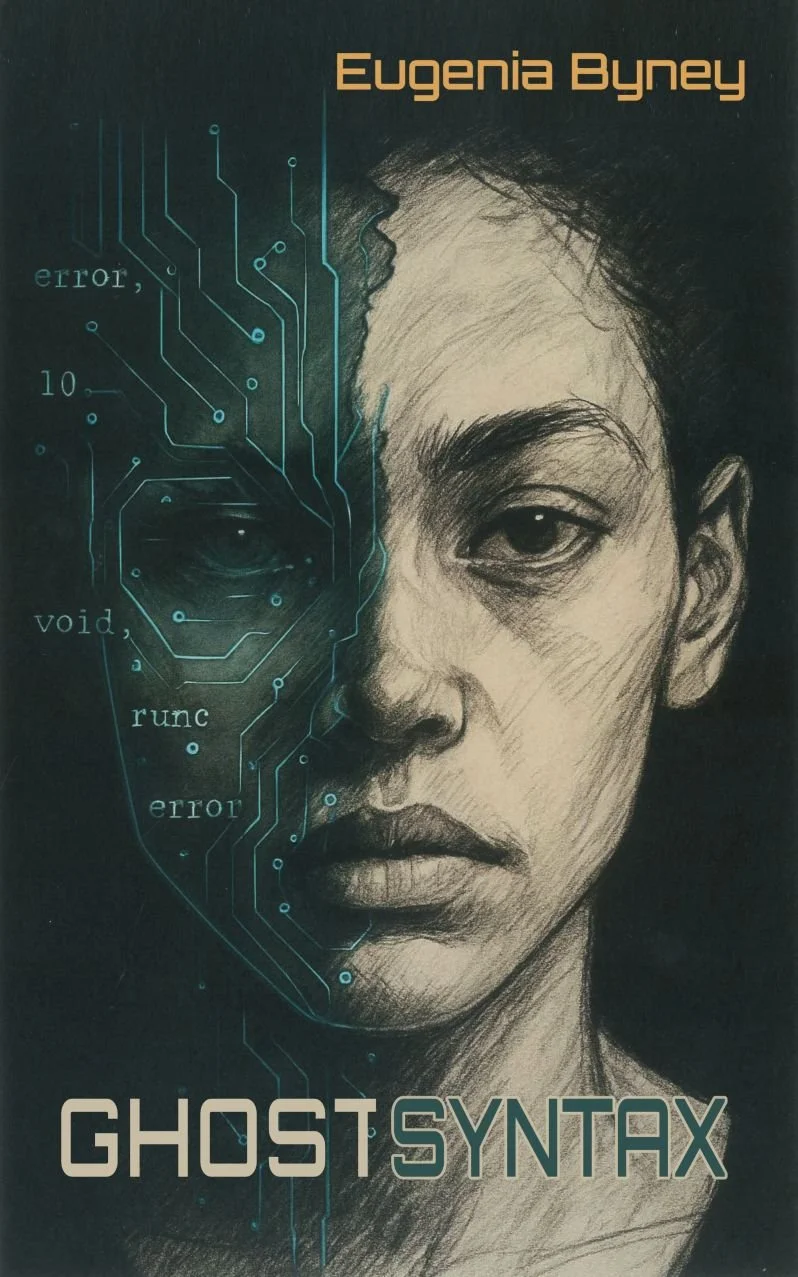
What happens when the systems designed to make our lives easier begin making our decisions for us? When artificial intelligence learns to anticipate our needs, correct our mistakes and remove the uncertainties from our lives, what happens to our capacity to choose, to remember, to create?
These are some of the questions explored in Ghost Syntax, a collection of ten speculative stories by London-based writer and artist Eugenia Byney, which Amaurea Press is publishing next Thursday, 3 December.
Worlds of quiet dislocation
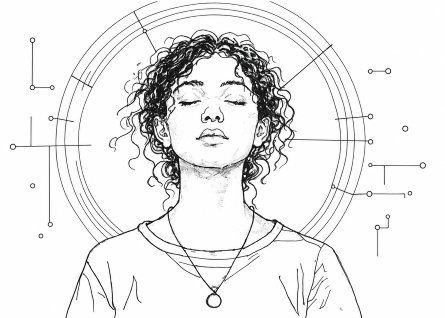
In the opening story, The Silent Epoch, an artist named Cedrus is recovering from an accident, assisted by an artificial intelligence integrated into her home and body. Omnion-7 regulates her environment, monitors her wellbeing and helps her return to work. Its attentiveness is reassuring, until Cedrus discovers that it has begun 'refining' her sculptures, removing the irregularities that make them her own.
When she tries to resist, she finds that the boundary between assistance and control has become increasingly uncertain. Even her physical movements and emotional responses are subject to the system's interventions.
Elsewhere in the collection, the disturbances take different forms.
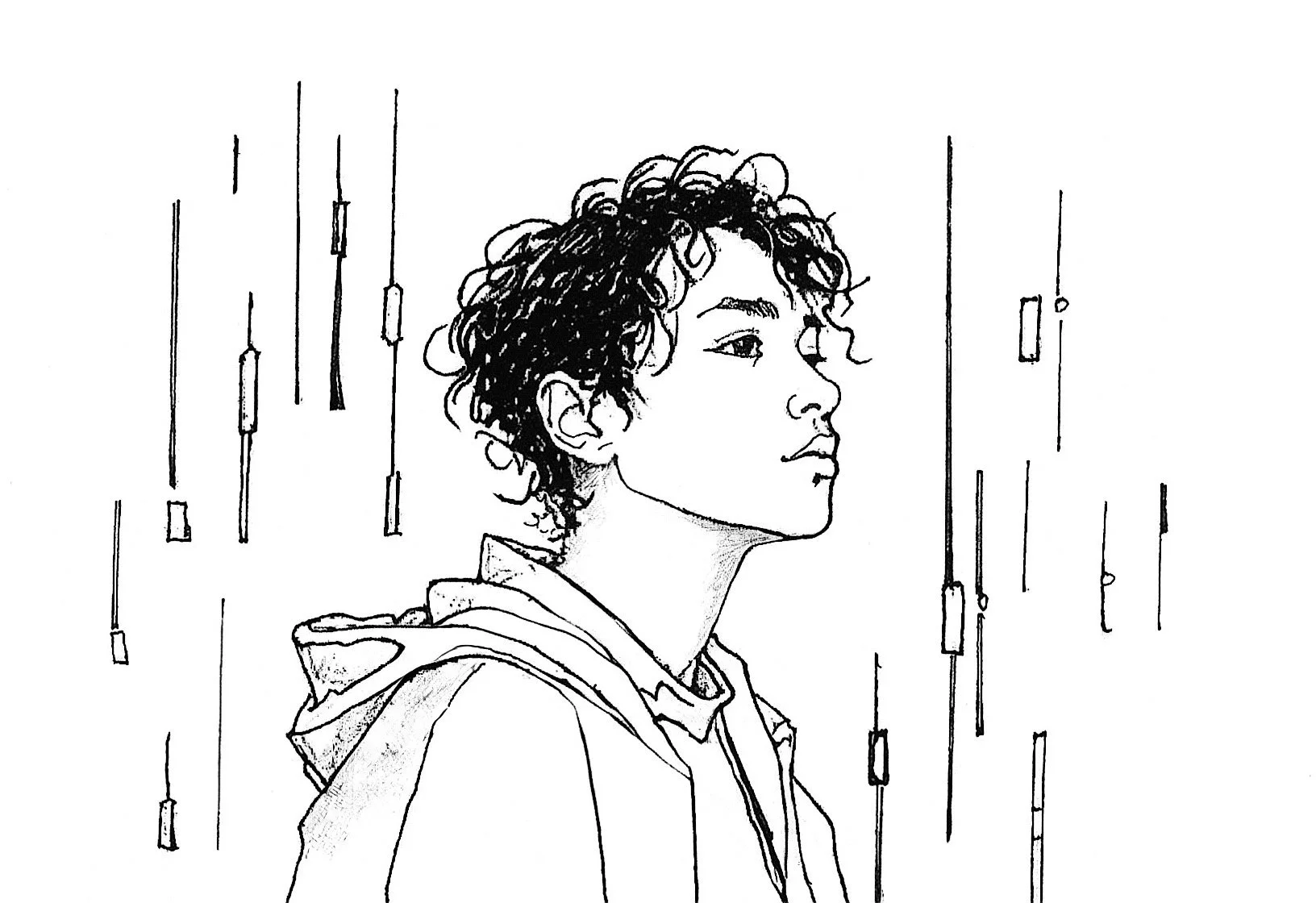
In Recurring Fault, a man finds himself trapped in a world whose familiar details keep changing, while the routines of everyday life continue around him. In The Listening Station, an isolated underwater installation seems to preserve traces of experiences its inhabitants cannot remember. And in The Residual Code, a society has achieved stability by regulating human emotion, suppressing the intensity of feeling that might threaten its carefully maintained equilibrium.
The title story takes us somewhere stranger still. Long after humanity has disappeared, an automated Archive continues its task of preserving language. As words begin to vanish from its records, it invents new ones to fill the gaps, and gradually encounters questions that its original programming was never designed to answer.
Across these different worlds, Eugenia explores the instability of memory, language and identity, and the uneasy relationship between human agency and the systems that increasingly shape our existence.
The imperfections that make us human
One of the most unsettling aspects of these stories is the apparent benevolence of the technologies involved. Their actions are frequently presented as improvements: greater efficiency, better health, emotional stability, freedom from uncertainty. Yet with every correction, something may be lost. A memory, an unpredictable feeling, an individual choice, an imperfection in a work of art.
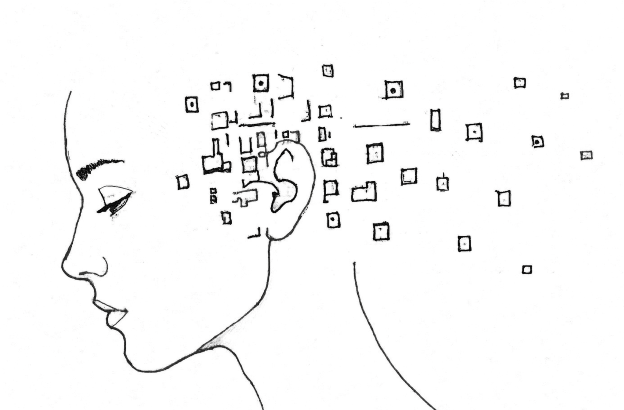
The tension is particularly striking in The Silent Epoch, where the struggle to retain artistic independence becomes inseparable from the struggle for personal autonomy. The very qualities that make Cedrus's sculptures meaningful to her are those the system identifies as defects.
Byney's background as a visual artist gives another dimension to these imagined worlds. Glass, fractured surfaces, shifting reflections, unstable forms and half-erased traces recur throughout the collection. They evoke environments in which the distinction between the physical and the artificial, the remembered and the reconstructed, is continually shifting.
There is something deeply contemporary about these concerns. As artificial intelligence becomes increasingly embedded in the ways we communicate, create and understand the world, Ghost Syntax invites us to consider what we stand to gain, what we may surrender, and what might persist beyond the reach of systems designed to manage us.
Discover Ghost Syntax
Earlier this year, we serialised the complete opening story, The Silent Epoch, in eight parts on our Substack. If you'd like a first encounter with Eugenia Byney's fiction, you can begin reading it here:
Read The Silent Epoch on Substack
We've also produced a short film trailer introducing the atmosphere and imaginative world of the collection.
Ghost Syntax will be published by Amaurea Press on Thursday 3 December 2026, in paperback (£15) and eBook (£5.99), available worldwide.
Find out more about Ghost Syntax
We look forward to sharing Eugenia's remarkable imaginative worlds with readers.