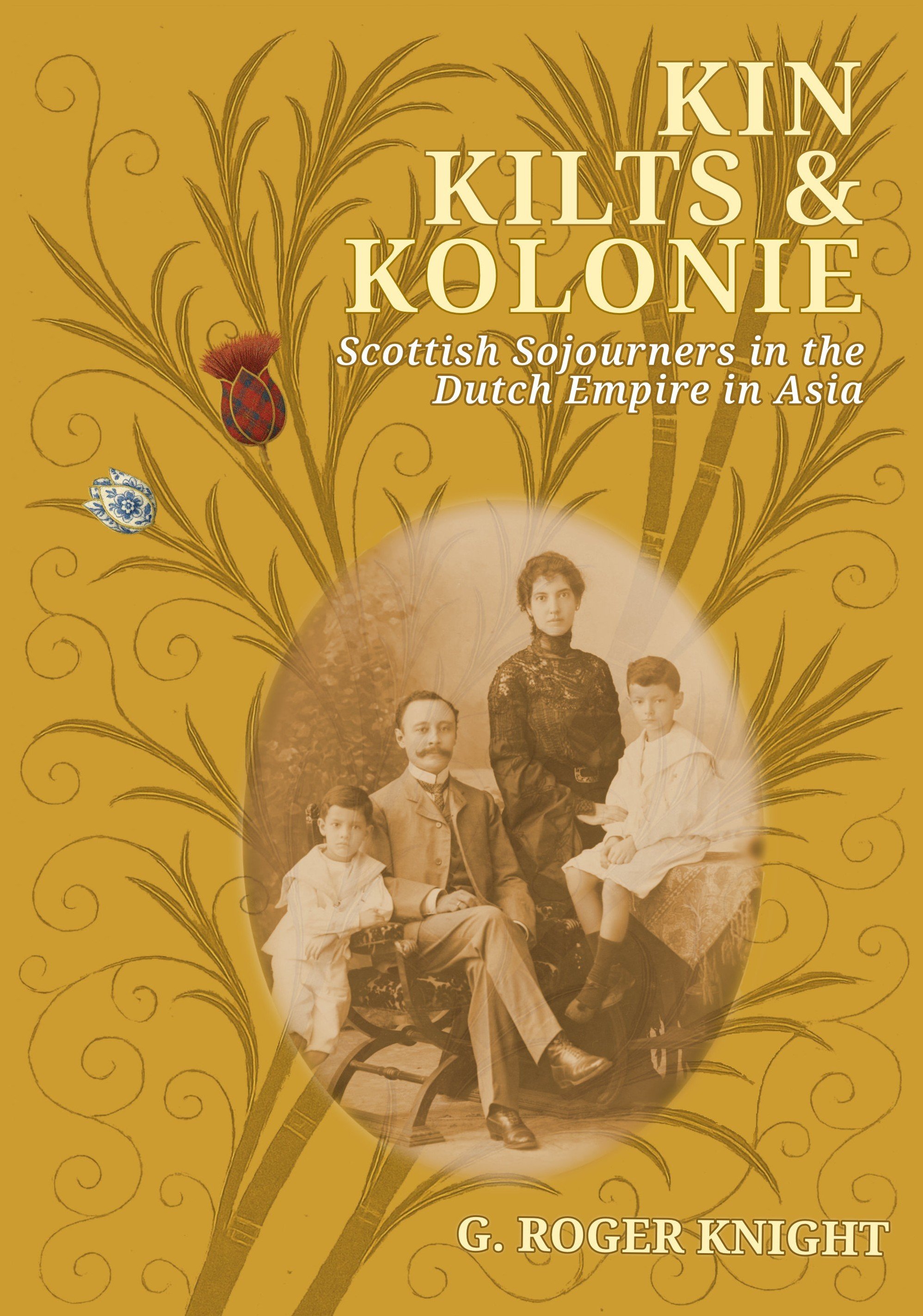
Kin, Kilts & Kolonie - from the ‘Land o’ Cakes’
On publication day of Kin, Kilts & Kolonie, we’re delighted to share the opening pages of G. Roger Knight’s remarkable new book – beginning with a St Andrew’s Day dinner in Batavia in 1838, where a small group of Scots found themselves at the heart of the Dutch empire in Asia . . .
It must have been a boisterous evening. After some fourteen toasts and accompanying musical interludes – among them, by way of a poetic reference to their homeland, was a toast (courtesy of Rabbie Burns) to ‘The Land o’ Cakes’, followed by a rendition of Auld Lang Syne – the party only broke up at two-thirty the following morning. The year was 1838 and the occasion, reported quite extensively in what was at that time the colony’s only newspaper, was a gathering of the city’s small contingent of Scots (and their many Dutch guests) who had sat down to celebrate St Andrew’s Day with an elaborate dinner in Batavia, the prime colonial city on Java and capital of the Dutch East Indies. It is a gathering that provides a cue for the stories of the ten or more families who gravitated around the Batavia-based firm of Maclaine Watson from the 1820s through to the Second World War and beyond, and as such recounts the arrival of sojourning Scots and other Britons and Irish at the heart of the Dutch empire in Asia during the opening decades of the nineteenth century. Primarily engaged in mercantile pursuits, their history is epitomised in the story of co-founder Gillian Maclaine and the Dutch woman, Catharina van Beusechem, whom he married in Batavia in 1832. The pages that follow explore how the Maclaine Watson cohort integrated into the Dutch colonial system through marriages, business acumen and their ability to navigate between British and Dutch imperial spheres. It emphasises that these Scots were not merely interlopers but became integral to the colonial project in Southeast Asia.
The dinner in question was perhaps the first formal event of its kind to be held anywhere in the Indies, and as such the local precursor of something (celebrated annually on 30th November) that became a staple of the Scottish diaspora worldwide. The Indies was no exception. Quintessential manifestations, such dinners have been described by one recent writer on the theme of ‘Haggis in the Raj’, as ‘well-attended, ritualised events’ that were instrumental in confirming, constructing and romanticising identity, as well as in ‘promoting oneself in potentially profitable ways by playing up one’s affinity for things Scottish’.
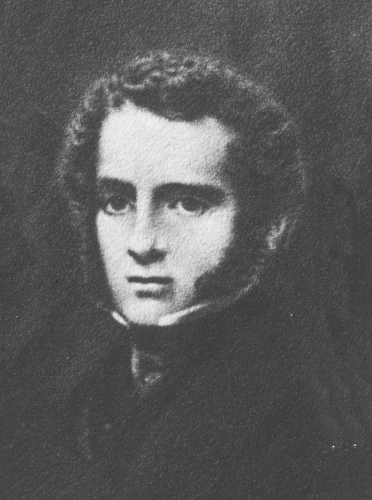
That ‘affinity’ was, of course, fully explicit in the toast in question, the evening’s fourth. It had been proposed by Gillian Maclaine (image on left), born on the Scottish Inner Hebridean island of Mull and co-founder more than a decade earlier of the Batavia-based commodity-trading firm of Maclaine Watson – the business concern that became the centre of gravity for the cohort of families whose stories form the substance of this book. A successful and increasingly wealthy individual among the Scots on Java, whose marriage to a young Dutch woman had brought him into the heart of the Indies’ colonial elite, he was the number-two figure presiding over the dinner and the proposer, later in the evening, of a further toast to ‘The Memory of Burns and Scott’ – both poet and novelist were already well on their way to becoming the twin paragons of the cultural focus of the diaspora.
The evening’s sequence of such acclamations had been launched by the dinner’s presiding figure, the Aberdeen-born John Davidson. His origins among the mercantile element in north-east Scotland’s major port served as a reminder that although some of the Scottish contingent on Java, including members of the Maclaine Watson cohort, were Highlanders, a significant number of them were not. Scion of a family evidently wealthy enough to send him to his native city’s Marischal College, north-east Scotland’s leading educational institution, he had first arrived on Java via the South Asian city of Bombay. By the 1830s he was a veteran of several mercantile partnerships in Batavia, and was a principal figure among the city’s Freemasons, where he was an inaugural member of Batavia’s ‘Star in the East’ Lodge, founded in 1837, but incorporating brethren from two earlier lodges in the same city.
Freemasonry worldwide has often been depicted as one of the signifiers of a specifically Scottish identity, not least because Scots ‘so frequently established lodges wherever they went’. In the Indies, however, the prior existence of a network – dating in some cases from the final decades of the eighteenth century and underlining the extent to which the Brotherhood had gained in traction not only in the Netherlands but also in its distant Asian colony – meant that instead of confirming any sense of Scottish separateness, the Brotherhood formed a bridge between arrivals from Scotland and the colonial society in which they were located. This was reinforced by a history of Anglo-Dutch co-operation centred on a shared espousal of Freemasonry during the British occupation of the island between 1811 and 1816. Admittedly, they would have noted some marginal differences. In particular, what has been described as the ‘subtle mixture of European and Asian influences’ in the material culture of the Indies lodges may have given them an unfamiliar appearance to Scots initiates. Yet they would also have been fully cognisant of the essentials of the Indies lodges’ rituals and ceremonies as well as of Freemasonry’s cosmopolitan ideals, in addition to the more mundane benefits of financial and social support for the deracinated who found themselves separated from both kin and country in far-flung parts of the world.
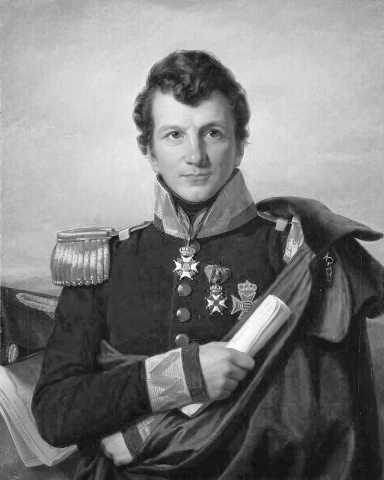
Hence, Scottish arrivals found themselves in what was a familiar cultural environment – and one shared by the highest ranks of the colonial establishment, among them Jan Michiel van Beusechem who was not only the Grand Master (successively) of the Batavia lodges ‘La Virtueuse’ and the ‘Star in the East’, but also the old and close friend of the erstwhile Governor-General Johannes van den Bosch (image on right), an individual whose adherence to Freemasonry dated from an earlier sojourn in the Indies, where he had first arrived in 1798, before returning there three decades later as the Dutch monarch’s representative. Appropriately, the St Andrew’s Day festivities continued with toasts to ‘The King of the Netherlands’ and ‘The Civil and Military Authorities’.
Nor, however, were ‘The Ladies of Batavia’ forgotten, in a toast proposed by the youngest Scot present: Gillian Maclaine’s cousin, the 22-year-old Donald Maclaine of Lochbuie, who had arrived in the colony only two years earlier. According to his not always amused relative, whose house guest he was, the young man had ‘a most unfortunate trait of falling in love’. Indeed, around this time he had written home to his dissolute elder brother, boasting that ‘I am happy as the day is long, in town all day making money and in the country in the evening making love’. The ‘Ladies of Batavia’, whatever connection they may have formed with Donald ‘Lochbuie’, were none of them present at the dinner, but a goodly number of their menfolk most certainly were. Indeed, the Scots in attendance would have been greatly outnumbered by their Dutch guests whose ‘Health and Prosperity’ were the subject of a toast halfway through the evening, and a further one to ‘The Land We Live In’, followed by ‘appropriate music’, presumably Dutch in inspiration. In short, the event was a far from exclusive affair: as well as being part of the glue that stuck diasporic Scots communities together, St Andrew’s Day celebrations also had the effect of consolidating their ties with their ‘host’ community and of helping further strengthen the networking that was an essential ingredient of commercial success.
Even so, the emphasis was heavily on Scotland and on things Scottish. Hence ‘The Memory of Wallace and Bruce’ was celebrated, followed by a rendition of ‘Scots Wha Hae’, and, after a further toast to ‘[Thomas] Campbell and Living Poets’, the dinner concluded with one to ‘Auld Reekie’ (Edinburgh). Of course, outward appearances, no less than sentiment, mattered, and although the newspaper only alluded to the fact that the Scots guests wore ‘distinctive apparel’, reports of similar events towards the end of the colonial era were more forthcoming: on one such occasion, for example, a Dutch guest observed that ‘a Scot is not a Scot without his national costume’ and recorded that the haggis was borne in ‘by a splendidly outfitted individual’, accompanied by others similarly attired. This was almost a century later, and allowance might need to be made for the passage of time, but there can be little doubt that back in 1838 Donald ‘Lochbuie’ would have appeared in the same ‘full Highland dress’ in which he had appeared at a masked ball given at Government House fairly soon after his arrival in the colony.
What begins here as a convivial evening in Batavia opens onto a far wider story – one that does not end in the East. In Kin, Kilts & Kolonie, G. Roger Knight traces these families across generations and continents, following them not only through their lives in the Dutch colonial world, but also through their return journeys and afterlives in Britain and beyond.
Published today by Amaurea Press, Kin, Kilts & Kolonie is available now in both hardback and eBook, directly from us and via all the usual outlets.
We’ll be sharing more glimpses from its pages in the weeks ahead.